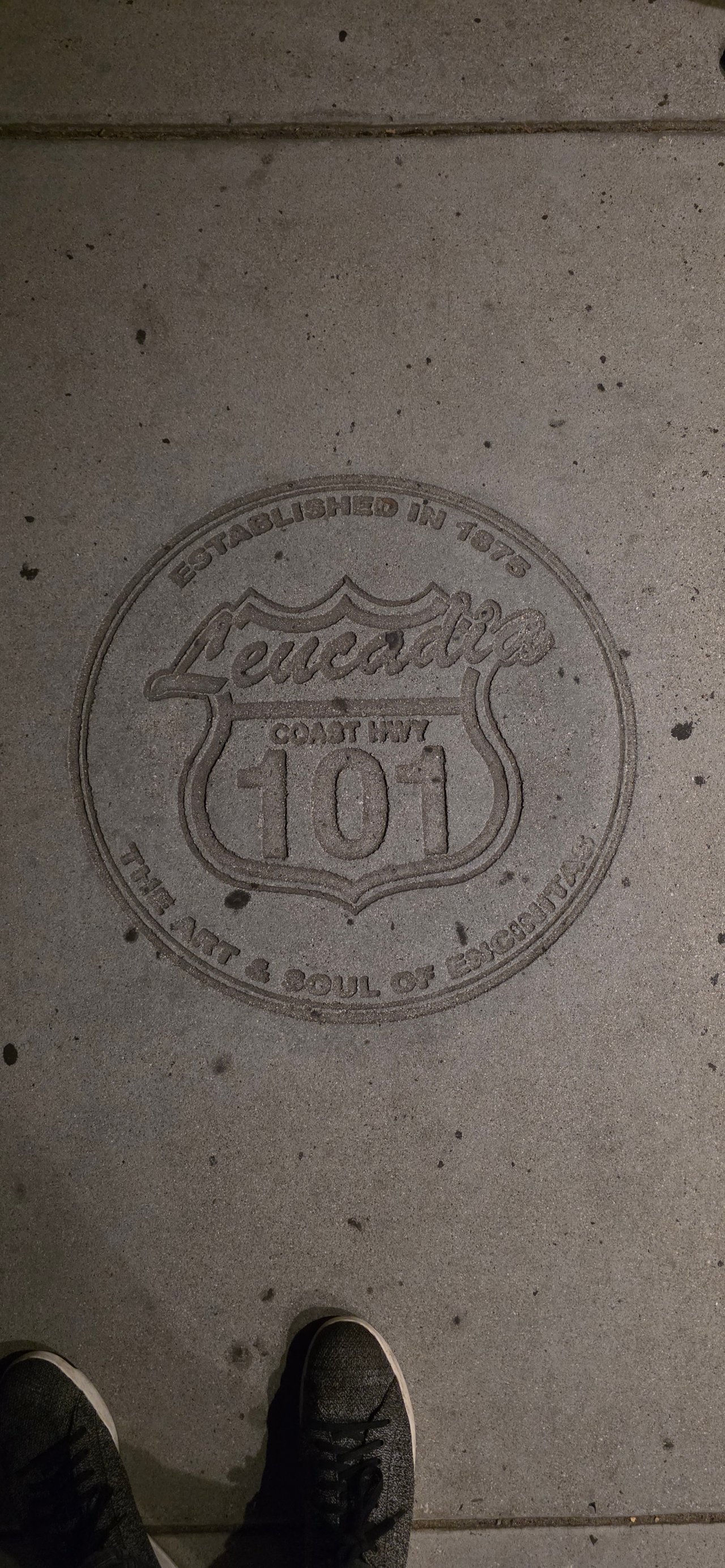
In a report for The Coast News, David Shapiro, co-owner of The Leucadian bar, said, "Revenue got stagnant as soon as the project started." He was describing what happened to his business the day heavy equipment showed up on Coast Highway 101. He's not alone. Ask most people in Leucadia what the construction is for and you'll get some version of the same answer: new bike lanes, a couple of roundabouts, maybe safer crosswalks. That's the part you can see. It's also the smaller part of the project.
The bigger part is thirty feet underground, and it explains almost everything about why this has taken two and a half years and counting.
The Work Beneath the Road
The Leucadia Streetscape project can look like a road job: repave, restripe, add some trees, done. But the current phase, officially called Segment C West and the North Coast Highway 101 Drainage Improvements, is fundamentally a stormwater project that happens to come with a streetscape attached. The city is installing 60-inch, 66-inch, and 36-inch storm drain pipe roughly 30 feet below the roadway between Jupiter Street and La Costa Avenue, along with a new water main. None of the visible upgrades, wider sidewalks, dedicated bike lanes, new streetlights, can be built until that underground work is finished, because the surface improvements sit directly on top of it.
That sequencing is the reason a project that reads as "road construction" to a driver has behaved, on the ground, more like a utility overhaul with a paving job at the end. Pipe first. Surface later. There's no way to shortcut the order.
Why Leucadia Needed the Pipe
The drainage work isn't cosmetic. Leucadia has a documented history of stormwater problems that predates any streetscape planning. During heavy rain events, the neighborhood's undersized system has, in the past, forced the city to pump untreated stormwater over the bluff and onto Beacon's Beach rather than let it flood streets and properties. As the area built out over the decades, more pavement and rooftops meant less ground to absorb runoff, which pushed an already inadequate system past its limits.
That history is why this segment of the project carries a nine-figure price tag relative to its length. The city's total investment in Leucadia Streetscape work has climbed past $65 million, financed in part through a $20 million loan from the California Infrastructure and Economic Development Bank and a $4 million HUD grant that, notably, only covers drainage work for about a third of the current project area. The rest comes from the city's own capital budget, which is one reason the timeline keeps bending around funding as much as around construction logistics.
The Project Schedule
Construction on Segment C began in March 2024. For most of 2025 and early 2026, the city's own project page listed a completion target of "late summer or fall 2026." Two contract amendments this year tell you the schedule was already sliding before that window arrived. On March 19, 2026, the City Council approved additional construction management and inspection services with Psomas specifically to cover an extended construction duration. A month later, on April 22, 2026, the council approved a similar amendment with Michael Baker International for extra civil engineering support, again tied to the project running longer than planned.
By early August, The Coast News reported that the city expected Segment C to be completed in October, with sidewalk and road work expected to be "up close and personal" with businesses in the meantime. The October estimate falls within the city's earlier "late summer or fall" completion window. That puts Segment C's expected completion roughly two and a half years after construction began in March 2024.
Mayor Tony Kranz has been candid that the inconvenience is real. As The Coast News reported, he expects the finished corridor to be "well worth the inconvenience." Both things can be true at once, and residents living through it are entitled to hold the city to the second half of that sentence.
What the Businesses Along the Route Are Actually Losing
The Coast News reported that the Leucadia 101 Mainstreet Association, the nonprofit that has represented corridor businesses since 2003, surveyed 20 businesses along the construction zone over the past year. Executive director Stacy Reddell's numbers show sales down an average of 25 percent to 40 percent among those surveyed, a meaningful hit for small, independently owned shops operating on thin margins to begin with.
The names behind those numbers are specific. Jeff Schade moved Leucadia Cyclery to its current spot on Highway 101 in 2024, expecting the location to be more convenient for customers. Instead, he's spent more than two years hearing from regulars who say they can't make it in because of the detours and lost parking, something he's described as feeling like a stab in the heart. Tom Chu, owner of Leucadia Donut Shoppe, has said the same access problems have made it harder for longtime customers to simply pull in and grab a coffee. Shapiro, at The Leucadian, has pointed to lost street parking as the specific reason event bookings have dried up, even as he acknowledges the drainage work genuinely needs to happen.
The city says driveway and business access has been preserved throughout construction. The association's survey, meanwhile, reports sales declines among the businesses surveyed.
What You'll Actually See When Segment C Wraps
The finished product, once the underground work is complete and paving catches up, includes new roundabouts at Jupiter Street and Moorgate Road, a pedestrian signal and crosswalk at Avocado Street, wider sidewalks, dedicated bike lanes, new streetlights, benches, and bike racks. The corridor is also getting a genuinely nice detail: the Leucadia 101 Mainstreet Association's original plan called for planting 101 new trees at the intersection of La Costa Boulevard and North Coast Highway 101, a small bit of numeric symmetry on a highway that's already carrying its own number in the name.
Here's the part that matters if you're trying to gauge when the disruption actually ends for good. Segment C is only about half the story. Two more phases, Segment A1 from A Street to Marcheta Street and Segment B from Basil Street to Jupiter Street, remain in design with no construction funding secured. City officials have put the remaining cost at roughly $50 million. Segment C finishing in October, if that date holds, closes out the most disruptive stretch of pipe work, but it doesn't mean the 2.5-mile corridor is done evolving. The next round of construction, whenever it's funded, will simply move to a different set of blocks and a different set of business owners.
For anyone navigating this stretch right now, the practical basics are worth keeping straight:
- Construction is concentrated between Jupiter Street and La Costa Avenue
- Curbside parking on the west side has been temporarily restricted
- Lane shifts move periodically as paving segments finish, including a southbound shift the city had targeted for mid-July
- Check the city's updates for current driveway and business access conditions
None of this changes what makes Leucadia worth living in day to day. It does explain why the work has continued across three summers, with Segment C currently expected to finish in October.
If you're weighing what any of this means for your own address on or near the 101, whether that's now or somewhere down the road, Todd Vassar has spent years reading North County's daily rhythms as closely as its market data. Reach out for a complimentary home valuation and a conversation grounded in what's actually happening on the ground, not just what the listing photos show.